
Annual Report 2023
Submitted to
College Education Development Project (CEDP)
Secondary and Higher Education Division, Ministry of Education
Government of the People’s Republic of Bangladesh
National University
Rajshahi College
Rajshahi 6000, Bangladesh
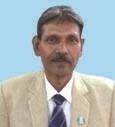
The message of Principal
As a developing country, Bangladesh has achieved progress in education, at least in enrollment to institutions and taking degrees. The number of graduates is increasing promptly; however, the quality of learning, the sole aspect of the sustainable development goals (SDG), is not yet achieved. Rajshahi College, like other institutions in the country, is trying to ensure the quality of its graduates and facing the challenges of common hurdles- inadequate classroom space, lack of trained and skilled teachers, and insufficient technological assistance.
We are fortunate to be selected for the Integrated Development Goal and received some significant projects from the College Education Development Project (CEDP). Our classrooms, student rooms, laboratories, and libraries are renovated with modern tiles and furniture, decorated with smart-board and multi-media projectors, and reformed with round tables and revolving chairs to fit them for student-centered learning. Uninterrupted channel of internet connectivity through Wi-Fi is provided to the students. Simultaneously, CEDP helps to make computer training possible for all the students of this college by establishing a large-scale computer lab on our campus. The computer training conducted by Rajshahi College for the student is free of cost. CEDP arranges various kinds of training for the teachers and the non-teaching staff. These initiatives of the project change the college environment, and the students enjoy learning in a favorable setting of education.
I express my gratitude to the government and the project operating team for their great help in enhancing the learning quality of Rajshahi College. I am also thankful to the IGD subproject team, for whose labor these works are the reality.
 Professor Md. Abdul Khaleque
Principal
Rajshahi College, Rajshahi
Table of Content
Chapter 1 : Introduction
1.0 Rajshahi College in Brief
1.1 Geographical Location
Rajshahi College coordinates the Latitude 24°21′52′′ North and the Longitude 88°35′41′′ East.
1.2 History and Academic Background
Rajshahi College, situated in the city of Rajshahi in the North-Western division of Bangladesh, is one of Bangladesh’s oldest higher education institutions. It was established in 1873 with the financial assistance of local landlords and other eminent people like Raja Pramathanath Roy of Dighapatiyara (Natore), Raja Promod Rai and Basanta Rai; Rani Saratsundari & Hemantkumari of Puthia (Rajshahi); Kumar Sarabindu Roy Bahadur of Bolihar (Naogaon); Khan Bahadur Emad Uddin Ahmed, Mirza Mohammad Yousuf Ali (translator of Kimia-E-Sa’dat), Haji Lal Mohammad, Khan Bahadur Rashid Khan Chowdhury; Khan Bahadur Ershad Ali Khan Chowdhury and Barrister Ashraf Ali Khan Chowdhuri (Deputy Speaker of the Bengal Legislative Council). Natore family (Zemindar) also contributed to the college’s progress by providing rent-free accommodation for the students (twenty students). After its establishment, the college became one of the famous education centers of undivided Bengal in British India. Students from various parts of British India, especially Bengal, Bihar, and Assam, came to get their education from this seminary. The college was the only institution offering Honours and Master’s degrees in East Bengal before the establishment of Dhaka University in 1921. In that period, students from remote areas of undivided Bengal, Assam, Bihar, and Orissa came to study at this college. Rajshahi became renowned in undivided India only because of this college and ultimately fashioned itself as an education city.
The College originated from Baulia English School, a private institution founded in 1828 by the concerted efforts of some eminent citizens. The school was taken over by the provincial government of Bengal and was converted into the Government Zilla School in 1836. In 1873, it was upgraded to an Intermediate College by introducing F.A. courses into its curriculum. This college was affiliated with the University of Calcutta and accorded the first-grade rank by adopting B.A. courses in 1878, and this year, named after Rajshahi City. Masters in Arts and Bachelor of Law classes were added to the college curriculum in 1881 and 1883, respectively. For the lack of adequate information from contemporary sources, we cannot assert the exact figure of the student enrolled initially in these courses. Evidence shows that eight students earned their Masters of Arts, while sixty took Bachelor of Law degrees within a few years. However, the post-graduation in Arts and Law from this institution was discontinued in 1909, failing to meet the requirements of Calcutta University’s new regulations.
Rajshahi College is the third oldest institution in Bangladesh (established after Dhaka College and Chittagong College). It is the first institution in North Bengal engaged in providing higher education. In 1947, the Bengal province of British India was divided into two parts, the East and the West, and the former joined the newly created two countries, Pakistan and India, respectively. Accordingly, the institution was detached from Calcutta University and affiliated with the University of Dhaka. It shifted its affiliation to the newly established University of Rajshahi in 1953. In the early nineties of the late century, after the establishment of the National University, Rajshai College was affiliated with National University. Rajshahi College is the third oldest institutional institution in Bangladesh (established after Dhaka College and Chittagong College). It is the first institution in North Bengal engaged in providing higher education. In 1947, the Bengal province of British India was divided into two parts, the East and the West, and the former joined the newly created two countries, Pakistan and India, respectively. Accordingly, the institution was detached from Calcutta University and affiliated with the University of Dhaka. It shifted its affiliation to the newly established University of Rajshahi in 1953. In the early nineties of the late century, after the establishment of the National University, Rajshahi College affiliated with the National University.
Although the college started its journey in the 1870s, the commerce program was not incorporated until 1952. The Courses in I Com, B Com (Pass), and B Com (Honors) were introduced here in 1952, 1954, and 1961 respectively. The institution re-introduced the Master’s degree program in 1994. It closed down the higher secondary courses in 1996 and re-introduced it in 2010. As a government institution, the college runs by the guidelines of the Ministry of Education, and it is affiliated with the National University for its educational programs.
1.3 Principals of the College
The first principal of the college, Mr. Haragobinda Sen, the Headmaster of Rajshahi Zilla School, served the institution for five years (1873-1878). After the up-gradation of the college, F T Dowding joined the post in 1879. Besides, many eminent educators ornamented the chair. Professor Md. Abdul Khaleque, a renowned professor of Economics, is the running principal.
1.4 Buildings and Other Institutions on College Premises
The college had no building at the beginning of the college. The administrative building, the first building of the college, was constructed in 1884 by the effort of the leaders of the Rajshahi Association. The two-storied red-colored structure, situated at the heart of the town, was designed by a skilled British engineer, erected at taka 67,700.00, and styled itself as one of the iconic examples of British Indian colonial architecture.
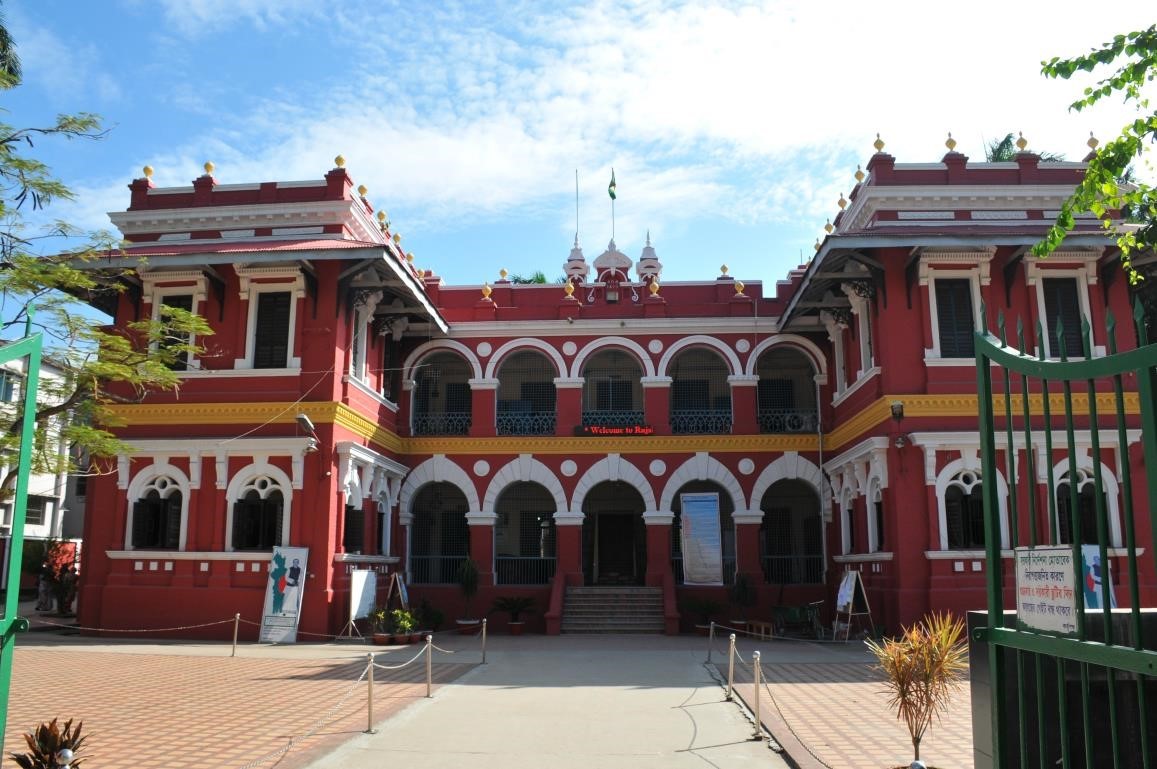
Rajshahi College Administration Building
PN Hostel, the first students’ asylum on the college campus, was established in 1894 by the Rajshahi Association. Roy Bahadur Kumudini Kanta Bandhopadhyay, a principal of the college (1897-1919, 1920-1924), took the initiative to improve the condition of this hostel. In 1902, another students’ hostel (Hamanta Kumari Hostel) was erected with the financial aid of Hemanta Kumari, the Rani of Puthia. Besides these structures, the Fuller Hostel, Biology Building, Chemistry Building, Physics Building, and former Muslim Hostel are the important buildings of the colonial era. Whereas the Library cum Auditorium building and Arts building are comparatively new and were erected in the 1950s. While the Science building was constructed in the 1990s. In continuation, the teachers’ dormitory and quarters, the Principal’s residence, another science and arts building, and a separate building for the Department of English were erected.
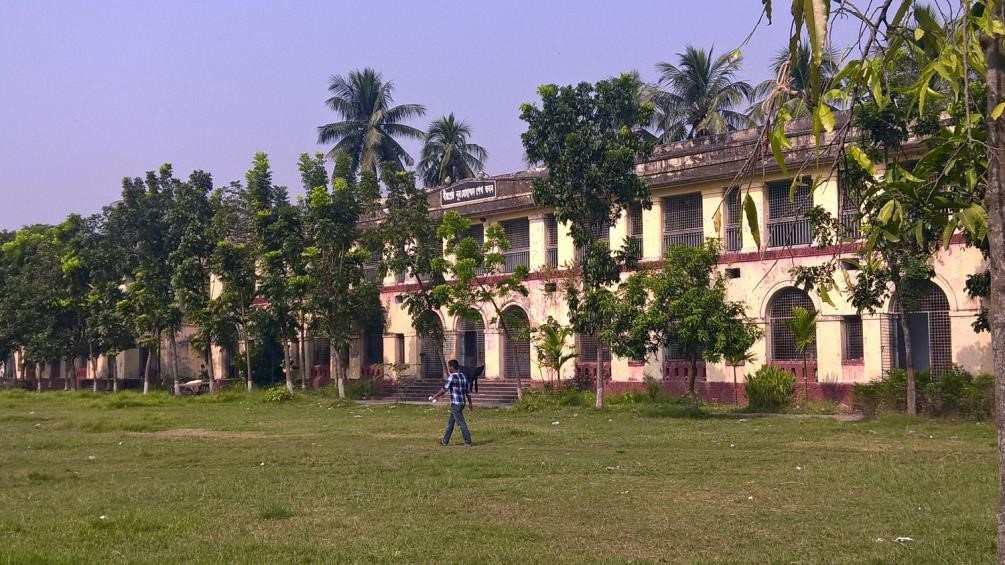
Beershrestha Nur Mohammad Hostel (one of the Muslim Hostels)
The gallery building on the west bank of the pond was built in 1888. It was the main building of Rajshahi Madrasah, subsequently converted into the Gallery, constructed with the financial aid of Haji Muhammad Mohsin, an eminent charitable personality. The building was named after him and is known as the Haji Muhammad Mohsin Building. The Muslim Fuller Hostel, another iconic structure, was constructed in 1909.
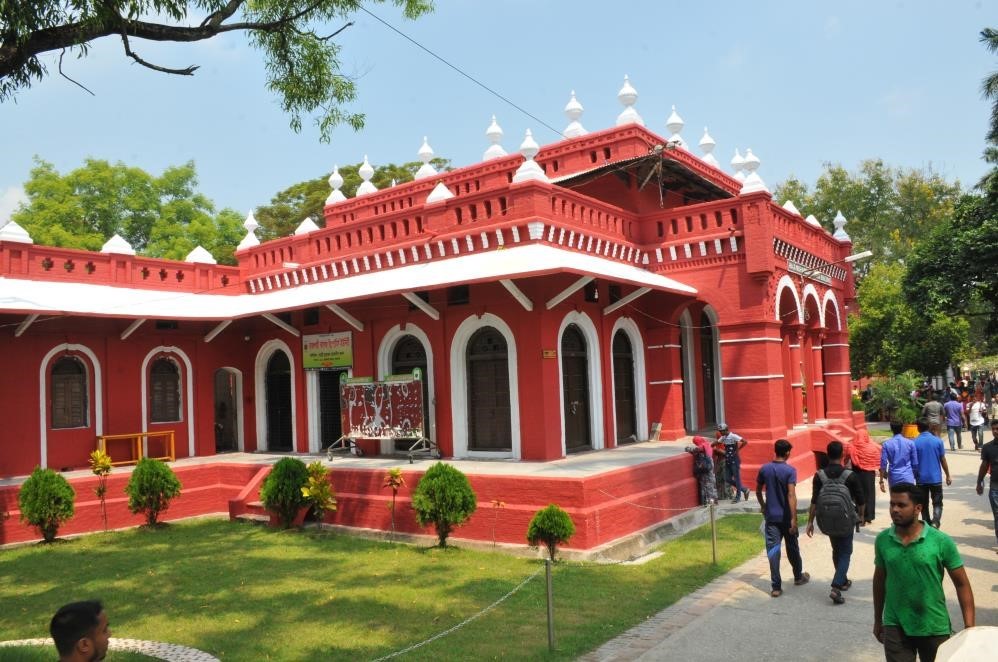
Gallery building erected by the financial aid of Haji Muhammad Mohsin (former Madrasa building)
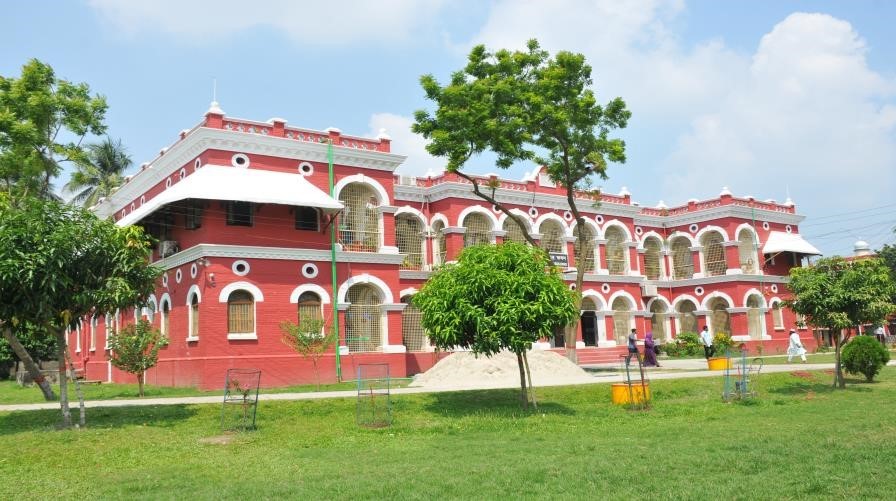
Fuller Building (former Muslim Fuller Hostel)
Principal’s residence, a two-storied British model structure, was built on the bank of the Padma River. Many renowned academicians lived in this building. The present principal is also residing here. Two three-storied residential buildings were constructed for the teachers (to the east of the principal’s residence).
In 1884, the Rajshahi Madrasah building was built on the college premises. The madrasah was shifted elsewhere in 1930, and the same year, the Fuller Hostel, was built in 1909 and was handed over to the college. The Basanta Kumar Agricultural Institution was established in 1936 under the Rajshahi College administration with the financial assistance of Basanta Kumar Roy of Dhigapathia. The institution was closed in 1952, and its building transfored to a hostel. In 1904, Moharani Hemanta Kumari Sanskrit College, a free Sanskrit learning institution, was established under the administration of Rajshahi College and subsequently merged therein.
1.5 Library and Laboratories
1.5.1 Library
Rajshahi College has the distinction of its Library containing both classics and recent editions of books, journals, and periodicals, and is acclaimed internationally as a reliable source of information available in print media.
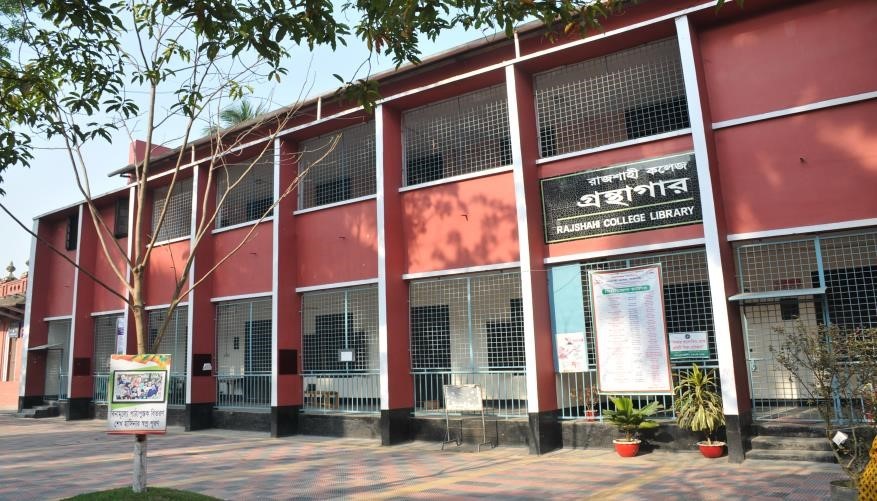
Rajshahi College Central Library
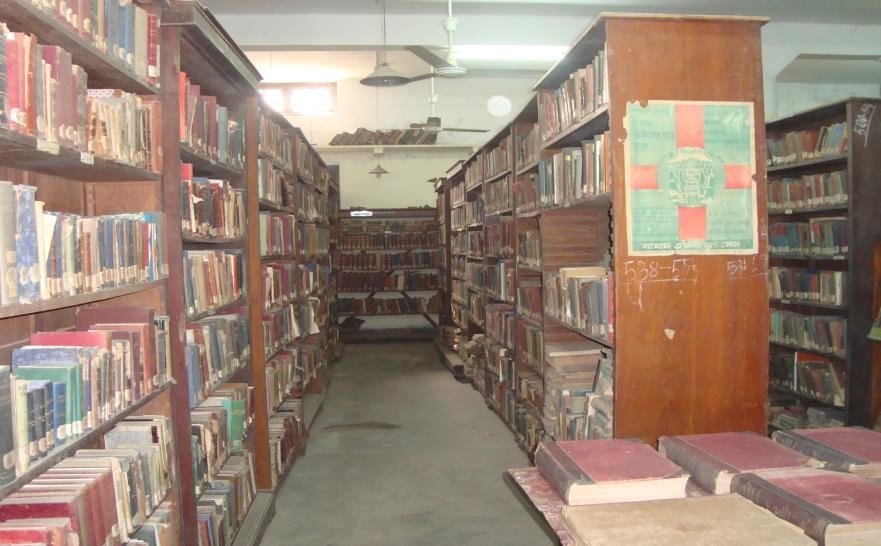
Rare book section of Rajshahi College Library
1.5.2 Laboratories
There are eight well-equipped Laboratories for carrying out scientific experiments and research. These are belonging to the departments of Physics, Chemistry, Botany, Zoology, Psychology, Mathematics, Stattistics and Geography & environment.
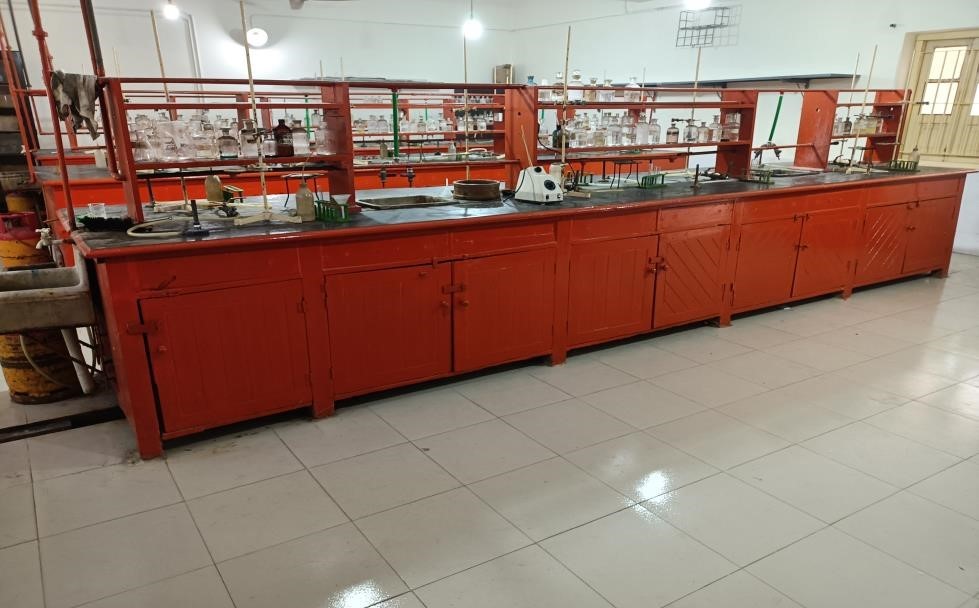
Chemistry laboratory
1.6 Publications and Informatics
The college publishes journals, magazines, and periodicals regularly. There are three peerreviewed journals of the college, the Bangla Sahittiki (Bangla), the Journal of Social Science (Bi-lingual), and the Rajshahi College Journal (Bi-lingual). This institution, probably the only government College, dares to manage all the data digitally and consequently become the pioneer of this field. It sets its server station along with LAN and Broadband Leased Line connections.
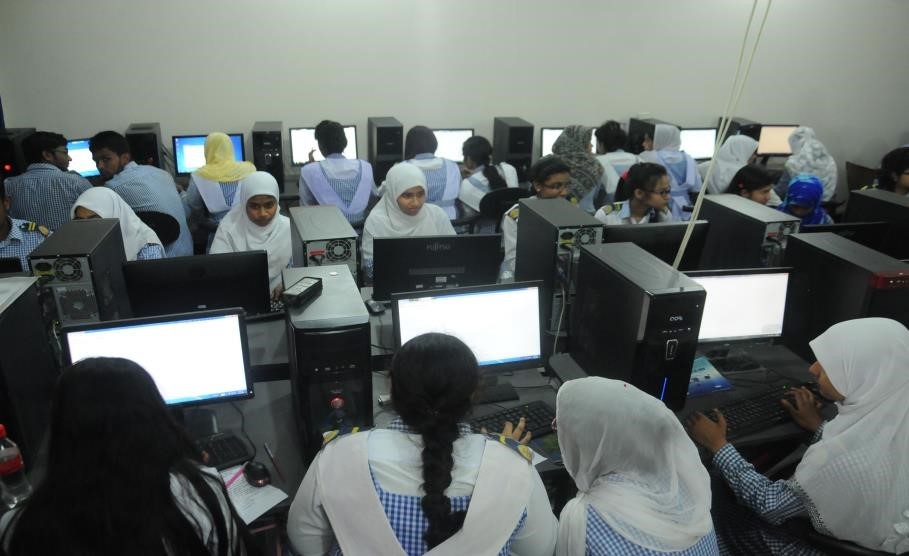
Rajshahi College ICT Lab
1.7 Student Enrollment
Rajshahi College started its journey on 1st April 1873 with six students and reached an admirable position by overcoming all uncertainty and obstacles within a few years. In 1878, the number of enrolments crossed the century. Subsequently, the numbers increased rapidly. In 1900, 1910, and 1920, the number of students in this college was 200, 400 800 respectively. The trend continued, and the number reached the thousand in 1924. The students were solely from the Hindu community. There was only one Muslim student at the college in 1873, and five years later, the number remained the same, only one. However, the scenario changed gradually, and the figure rose to 156 and 215 in 1916 and 1924, respectively. Subsequently, the number of Muslim students increased in college. After 1947, eventually, it exceeded the Hindus.
By the 1930s, the number of students in this college reached about a thousand. Still, there was no scope for education for females. In 1931, the glorious year, in which the college started taking girl students. In 1970, the college had 1,840 students, of whom about 300 were girls. The college vastly expanded after the independence of Bangladesh, and in 1990, the number of students was 4,732, of whom 1,352 were girls. The enrolment increased to about 8,000 in 2000 and 25,000 in 2012. Now the number of students enrolled in Rajshahi College is 22,381 (without HSC students).
The college offers 23 honors and 21 Masters’ courses with 229 teachers, of which 63 are female. The college has a rich library on the campus containing rare books, gazettes, encyclopedias, manuscripts, and ancient Puthis. The number of collections in this library is 3,71,603.
1.8 Role in Language Movement and Liberation War
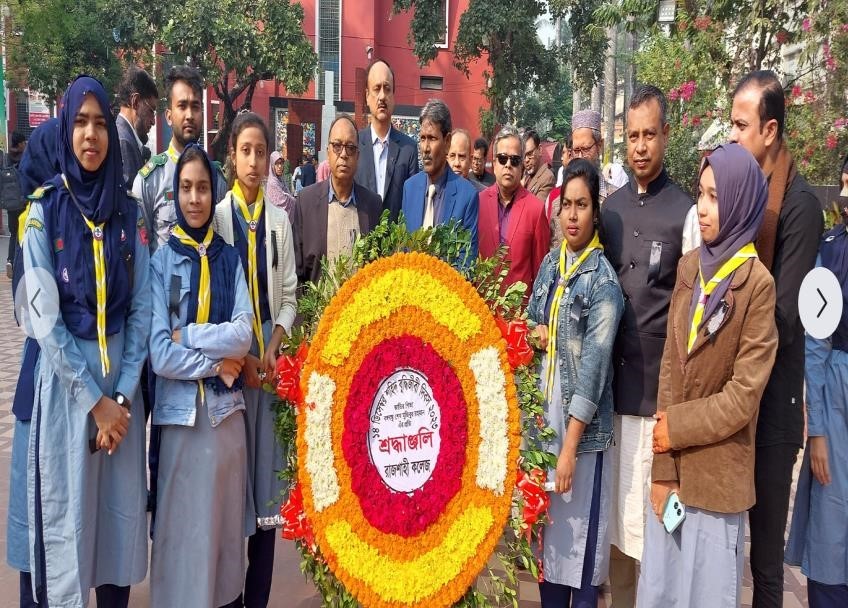
Rajshahi College teachers and students had an immemorable contribution to the moment crucial for the political and social life of the nation. They participated in the Language Movement immediately after the killing of students in Dhaka on 21 February 1952. They built ‘the first martyr monument’ dedicated to the Language Movement. The present monument to the Language Movement was built in the afternoon on 23 February 1952.
The students of Rajshahi College had an active role in subsequent movements. They took part in the student movements of 1962 and 1969. Similarly, they had an active role in the Liberation War of 1971. Many students and teachers of this college joined and fought in the glorious event of the history of our country. Rajshahi College teachers and students had an immemorable contribution to the moment crucial for the political and social life of the nation. They participated in the Language Movement immediately after the killing of students in Dhaka on 21 February 1952. They built ‘the first martyr monument’ dedicated to the Language Movement. The present monument to the Language Movement was built in the afternoon on 23 February 1952.
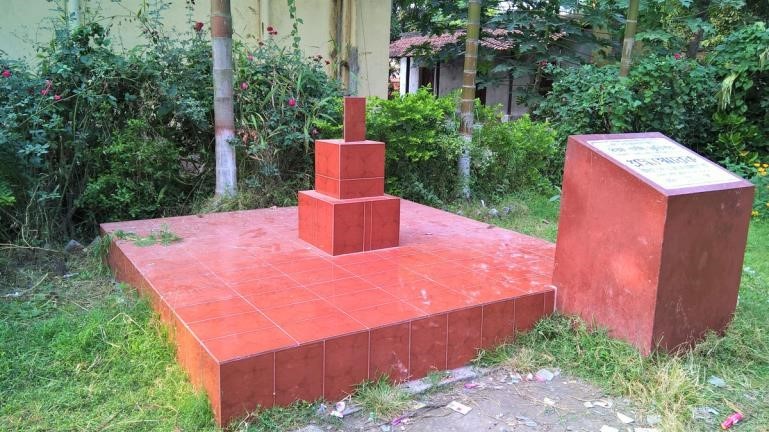
The ‘First Martyr Monument’ in Rajshahi College Campus
The students of Rajshahi College had an active role in subsequent movements. They took part in the student movements of 1962 and 1969. Similarly, they had an active role in the Liberation War of 1971. Many students and teachers of this college joined and fought in the glorious event of the history of our country. It is to be noted that at least 6 students of the College (Rajshahi College) sacrificed their fives in the liberation war.
1.9 Notable Past Academics
Professor Suniti Kumar Bhattacharya
Dr. P. V. Shastri
Dr. Kudrat-E-Khuda
Humayun Kabir
Professor Abu Hena
Professor Souren Majumder
Professor Khemeshchandra Dey
Dr. Snehmoy Datta
Professor B. C. Kunda
Dr. Golam Muksud Hilali
Professor Kabir Choudhury
Dr. A. R. Mallik
Professor M. Shams Ul Haque
Dr. Abdullah Al Muti Sharfuddin
Dr. M. A. Bari
Dr. Kazi Abdul Mannan
Dr. Abu Hena Mustafa Kamal
1.10 Current Faculties
Presently the institution is being run by 22 Professors, 57 Associate Professors, 80 Assistant Professors, and 82 Lecturers. A list of present faculty is to be available in the link.
1.11 Notable Alumni
Md. Golam Kabir
Sir Jodunath Sarkar (eminent historian)
Qazi Motahar Hossain (foremost novelist)
Romaprasad Chanda (historian)
Akshay Kumar Maitreya (famous historian and playwright)
Sree Radhika Mohon Moitrya
Promothnath Bishi (writer)
Rajanikanta Sen (famous poet)
Khan Bahadur Emaduddin Ahmad (politician)
Mirza Golam Hafiz (politician)
Dr. Kazi Abdul Mannan (educator)
Dr. Mazharul Islam (folklorist and writer)
Dr. Golam Moula (famous surgeon)
Justice Badrul Haider Choudhury
Justice Muhammad Habibur Rahman (chief advisor, caretaker government)
Dr. Md. Enamul Haque
Rittik Ghotok (eminent dramatist)
Shahid Anwar Pasha (novelist)
Dr. Ebne Golam Samad (educator, columnist, and writer)
Dr. Emaz Uddin Ahmad (political scientist)
Dr. M. A. Wazed Miah (famous nuclear scientist)
Nazma Jesmin Choudhury
1.12 Notes on Achievements
Rajshahi College is the best educational institution in Bangladesh. It stood first in college ranking (four times consecutively) in the country (at college-level ranking conducted by the Ministry of Education, Bangladesh). However, it placed itself in second position in 2023. In addition, the college stood first (four times consecutively) among the post-graduate colleges in Bangladesh affiliated with the National University.
The college is dedicated to improving and ensuring quality education. Students’ performance in various examinations, of the University and Board, exhibits success and testifies to the quality of the institution.
Chapter 2
Institutional and Academic Overview of the College
2.1 Governance and Teaching Structure
There are a Principal, a Vice Principal, 20 Professors, 57 Associate Professors, 80 Assistant Professors, 83 Lecturers, and 8 Demonstrators posts in the teaching structure of the college. There are 55 office staff (including a post of Librarian) for running the office of the college smoothly. The department-wise lists (number of posts and working employees) of the teaching staff and office staff are given below.
Table 2.1: Department-wise Teaching Staff
| Sl. No. | Name of the Department | Profess or | Associate Professor | Assistant Professor | Lecture r | Demonstrator | Working | Total | |||||
|---|---|---|---|---|---|---|---|---|---|---|---|---|---|
| Post | Working | Post | Working | Post | Working | Post | Working | Post | Working | ||||
| 1 | Bangla | 1 | 1 | 3 | 3 | 3 | 4 | 4 | 4 | 0 | 0 | 11 | 12 |
| 2 | English | 1 | 1 | 3 | 7 | 4 | 5 | 4 | 0 | 0 | 0 | 12 | 13 |
| 3 | Arabic & Islamic Studies | 1 | 2 | 2 | 1 | 3 | 5 | 3 | 1 | 0 | 0 | 09 | 09 |
| 4 | Urdu | 0 | 0 | 0 | 0 | 1 | 1 | 1 | 0 | 0 | 02 | 01 | |
| 5 | Sanskrit | 0 | 0 | 1 | 1 | 1 | 1 | 2 | 2 | 0 | 0 | 04 | 04 |
| 6 | History | 1 | 3 | 3 | 3 | 4 | 3 | 4 | 2 | 0 | 0 | 12 | 11 |
| 7 | Islamic History | 1 | 2 | 3 | 4 | 4 | 3 | 4 | 1 | 0 | 0 | 12 | 10 |
| 8 | Philosophy | 1 | 1 | 2 | 3 | 4 | 6 | 4 | 1 | 0 | 0 | 11 | 11 |
| 9 | Political Science | 1 | 2 | 3 | 3 | 4 | 6 | 4 | 2 | 0 | 0 | 12 | 13 |
| 10 | Sociology | 1 | 1 | 3 | 2 | 4 | 4 | 4 | 1 | 0 | 0 | 12 | 08 |
| 11 | Social Work | 1 | 2 | 3 | 4 | 4 | 5 | 4 | 2 | 0 | 0 | 12 | 13 |
| 12 | Economics | 1 | 2 | 3 | 3 | 4 | 6 | 4 | 1 | 0 | 0 | 12 | 12 |
| 13 | Physics | 1 | 2 | 3 | 1 | 4 | 5 | 4 | 3 | 2 | 0 | 14 | 11 |
| 14 | Chemistry | 1 | 3 | 3 | 1 | 4 | 5 | 4 | 3 | 2 | 0 | 14 | 12 |
| 15 | Mathematics | 1 | 2 | 3 | 2 | 4 | 8 | 4 | 0 | 0 | 0 | 12 | 12 |
| 16 | Botany | 1 | 2 | 3 | 4 | 4 | 4 | 4 | 2 | 2 | 0 | 14 | 12 |
| 17 | Zoology | 1 | 3 | 3 | 3 | 4 | 4 | 4 | 3 | 2 | 0 | 14 | 13 |
| 18 | Psychology | 1 | 2 | 3 | 2 | 4 | 3 | 4 | 3 | 0 | 0 | 12 | 10 |
| 19 | Statistics | 1 | 1 | 2 | 1 | 4 | 5 | 4 | 2 | 0 | 0 | 11 | 09 |
| 20 | Geography | 1 | 1 | 2 | 2 | 4 | 5 | 4 | 2 | 0 | 0 | 11 | 10 |
| 21 | Management | 1 | 3 | 3 | 2 | 4 | 3 | 4 | 3 | 0 | 0 | 12 | 11 |
N.B. The number of working teachers does not correspond to the number of posts. Some departments have attached teachers, and some teachers are in-situ in the previous posts after getting promotions. Therefore, the number of posts and the working teachers are not the same in the table.
Table 2.2: Other Staff
| Sl. No. | Name of the Post | No. of Posts | No. of Posted Employee | No. of Vacant Posts |
|---|---|---|---|---|
| 1 | Librarian | 1 | 1 | 0 |
| 2 | Assistant Librarian cum cataloger | 1 | 1 | 0 |
| 3 | Physical Teacher | 1 | 0 | 1 |
| 4 | Head Assistant | 1 | 1 | 0 |
| 5 | Accountant | 1 | 1 | 0 |
| 6 | Cashier | 1 | 0 | 1 |
| 7 | Account Assistant | 2 | 2 | 0 |
| 8 | Office Assistant cum Computer Operator/Typist | 4 | 4 | 0 |
| 9 | Mechanic cum Electrician | 1 | 1 | 0 |
| 10 | Store Keeper | 1 | 1 | 0 |
| 11 | Skill Bearer | 4 | 0 | 4 |
| 12 | Book Sorter | 2 | 0 | 2 |
| 13 | Cash Sarker | 1 | 0 | 1 |
| 14 | Office Assistant | 24 | 22 | 2 |
| 15 | Sweeper | 2 | 1 | 1 |
| Total | 47 | 35 | 12 | |
2.2 List of Departments and others Academic Programs
There are 23 departments in this college. In the academic year 2022-23, a total no of 22368 students were admitted in Honours and Master’s level (Honours 13666 and Masters 7492). Besides this, 1210 students were also admitted to Degree (Pass) courses and 1063 were admitted in the Master’s Part 1. Department-wise enrollment of the students is given below:
Table 2.3: Number of Students Enrolled in Honors & Masters Courses
| Sl. No. | Department | Honors | Masters Part-I | Masters Final Year | Total |
|---|---|---|---|---|---|
| 1 | Bangla | 644 | 00 | 401 | 1045 |
| 2 | English | 587 | 00 | 289 | 876 |
| 3 | Arabic | 249 | 00 | 57 | 306 |
| Islamic Studies | 00 | 08 | 24 | 32 | |
| 4 | Urdu | 00 | 00 | 00 | 0 |
| 5 | Sanskrit | 33 | 00 | 00 | 33 |
| 6 | History | 865 | 23 | 351 | 1239 |
| 7 | Islamic History and Culture | 824 | 43 | 429 | 1296 |
| 8 | Philosophy | 592 | 03 | 287 | 882 |
| 9 | Political Science | 825 | 256 | 556 | 1637 |
| 10 | Sociology | 821 | 216 | 472 | 1509 |
| 11 | Social Work | 680 | 59 | 340 | 1079 |
| 12 | Economics | 857 | 13 | 296 | 1166 |
| 13 | Physics | 477 | 11 | 150 | 638 |
| 14 | Chemistry | 417 | 26 | 181 | 624 |
| 15 | Mathematics | 569 | 19 | 300 | 888 |
| 16 | Botany | 517 | 51 | 302 | 870 |
| 17 | Zoology | 524 | 91 | 303 | 918 |
| 18 | Psychology | 762 | 34 | 256 | 1052 |
| 19 | Statistics | 302 | 00 | 110 | 412 |
| 20 | Geography and Environment | 626 | 65 | 301 | 992 |
| 21 | Management | 803 | 93 | 432 | 1328 |
| 22 | Accounting | 800 | 24 | 486 | 1310 |
| 23 | ICT | 00 | 0 | 0 | 0 |
| 24 | Marketing | 450 | 26 | 53 | 529 |
| 25 | Finance & Banking | 455 | 02 | 53 | 510 |
| Total | 13,679 | 1,063 | 6,429 | 21,171 |
Table 2.4: Number of Student Enrolled in Degree Courses
| Sl. No. | Department | No. of Student Enrolled |
|---|---|---|
| 1 | B. A. | 391 |
| 2 | B. S. S. | 263 |
| 3 | B. B. S | 368 |
| 4 | B. Sc. | 188 |
| Total | 1,210 | |
Table 2.5: Department-wise Teacher-Student Ratio
| Serial No. | Department | No. of Students | No. of Teachers | No. of Student per Teacher |
|---|---|---|---|---|
| 1 | Bangla | 1045 | 12 | 87 |
| 2 | English | 876 | 13 | 67 |
| 3 | Arabic & Islamic Studies | 338 | 09 | 38 |
| 4 | Urdu | 00 | 01 | 00 |
| 5 | Sanskrit | 33 | 04 | 8 |
| 6 | History | 1239 | 11 | 113 |
| 7 | Islamic History | 1296 | 10 | 130 |
| 8 | Philosophy | 882 | 11 | 80 |
| 9 | Political Science | 1637 | 13 | 126 |
| 10 | Sociology | 1509 | 08 | 188 |
| 11 | Social Work | 1079 | 13 | 83 |
| 12 | Economics | 1166 | 12 | 97 |
| 13 | Physics | 638 | 11 | 58 |
| 14 | Chemistry | 624 | 12 | 52 |
| 15 | Mathematics | 888 | 12 | 74 |
| 16 | Botany | 870 | 12 | 72 |
| 17 | Zoology | 918 | 13 | 71 |
| 18 | Psychology | 1052 | 10 | 105 |
| 19 | Statistics | 412 | 09 | 46 |
| 20 | Geography and Environment | 992 | 10 | 99 |
| 21 | Management | 1328 | 11 | 121 |
| 22 | Accounting | 1310 | 11 | 119 |
| 23 | ICT | 0 | 01 | 00 |
| 24 | Marketing | 529 | 00 | 00 |
| 25 | Finance & Banking | 510 | 00 | 00 |
| Total = | 21,171 | 229 | 92 |
N.B. Beside the students of respective departments, the teachers deal with others who are enrolled in the Degree Pass courses.
2.3 Key Academic Statistics
The result of this college at different levels is satisfactory. In Degree (Pass Course) the pass rate is 52 %, in Honours 92 %, in Masters (Pre) 76 %, and in Masters (Final) 96 %. The overall pass rate is 79 %. The Male-Female Student Ratio of this College is 52:48 and the Teacher-Student Ratio is 1:97. The number of Male and Female Stipend and Scholarship Receiving Students is shown in the following tables.
Table 2.6: Number of Stipend Receiving HSC Students, 2023
| Group | Board Stipend (HSC) | |||
|---|---|---|---|---|
| Male | Female | Total | Remark | |
| Science | 107 | 162 | 269 | |
| Arts | 14 | 11 | 25 | |
| Commerce | 20 | 17 | 37 | |
| Total = | 141 | 190 | 331 | |
| Upabritti XI | ||||
| Science | 3 | 6 | 9 | |
| Arts | 7 | 13 | 20 | |
| Commerce | 5 | 3 | 8 | |
| Total = | 15 | 22 | 37 | |
| Upabritti XII | ||||
| Science | 2 | 7 | 9 | |
| Arts | 6 | 4 | 10 | |
| Commerce | 8 | 3 | 11 | |
| Total = | 16 | 14 | 30 | |
| Grand Total = | 172 | 226 | 398 | |
Table 2.7: Number of stipend Receiving Bachelor and Master’s Students, 2023
| Group | Board stipend/Upabritti | |||
|---|---|---|---|---|
| Male | Female | Total | Remark | |
| 1st Year Honours | 40 | 42 | 82 | |
| 2nd Year Honours | 48 | 61 | 109 | |
| 3rd Year Honours | 22 | 27 | 49 | |
| 4th Year Honours | 25 | 37 | 62 | |
| Master’s Part 1 | 6 | 8 | 14 | |
| Master’s Final | 2 | 3 | 5 | |
| Degree Pass | 64 | 84 | 148 | |
| Total = | 207 | 262 | 469 | |
2.4 Infrastructure and Facility Profile of the College
There are about twenty-one thousand students studying in this college. The institution has the following Infrastructure and Facility Profile:
1) Number of Hostels
Student Dormitories: The number of dormitories is 11 of which 9 for male and 2 for female. Seats for residing in these dormitories are 1286 [Male: {Muslim Hostel 590 (Bachelor & Master’s 458; HSC 132); Hindu Hostel 53}, and Female 643].
Teachers’ Dormitories: There are two teachers’ dormitories in the campus. Male and female teachers can avail these rental asylums. The dormitories allowed the family members of their residence.
2) Computer Lab
The College has three computer labs, well-furnished with desktop computers. Besides this, there are distinct labs in the departments, for example, Physics and Mathematics have their computer labs.
3) Science lab
There are eight science departments in Rajshahi College, and they have separate laboratories for practical of their scientific experiments. In this year, CEDP provides scientific equipment and instruments to these laboratories, especially to the laboratories of Physics, Chemistry, Botany and Zoology that improve their facilities. In addition, the project refurbishes chemistry lab’s floor with tiles.
Chemistry Lab
4) Auditorium
The college has a central auditorium. It is a large convention hall well-furnished with a digital sound system and central air conditioning.
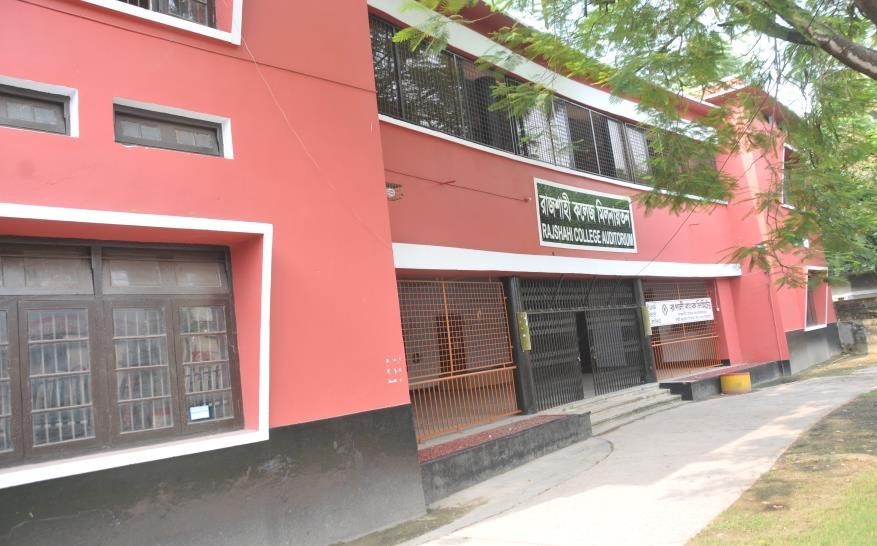
Rajshahi College Auditorium
5) Academic Facilities:
- Gymnasium : 01
- Library : A Central Library enriched with almost 75000 books and numbers of rare books in different fields and having 23 Seminar Libraries in 23 Departments.
Rajshahi College Library
6) Common Room
There are two central common rooms for the students, one for males and another for females.
Besides, there are 11 common rooms for the students in the hostels (8 in the boy’s and 2 in the girl’s hostels).
7) Teachers’ Room
There is a central teacher’s room, the staff council’s room, in the administration building. Beside, twenty-three departments have their teachers’ rooms for the teaching staff of respective departments.
8) Girls’ Common Room:
There is a common room for girls at the first floor of administrative building.
9) Toilet:
In the college campus, there are 139 toilets in the campus, seventy-five for male, and sixty-four for the female.
10) Internet Access Facilities
All teachers and students avail Internet facilities through Wi-Fi and LAN connection. However, LAN is only limited to the selected persons who are engaged in the special works.
11) Digital Teaching Facilities in Classrooms
All the classrooms have digital facilities. The teachers are conducting classes using multimedia projectors and Smart Boards. All the classrooms have Wi-Fi facilities. However, LAN connections are limited. It is to be mentioned that CEDP provides 87 multimedia projectors and 21 Smartboards. It enhances college’s digital ability through networking connectivity and providing BdREN connection.
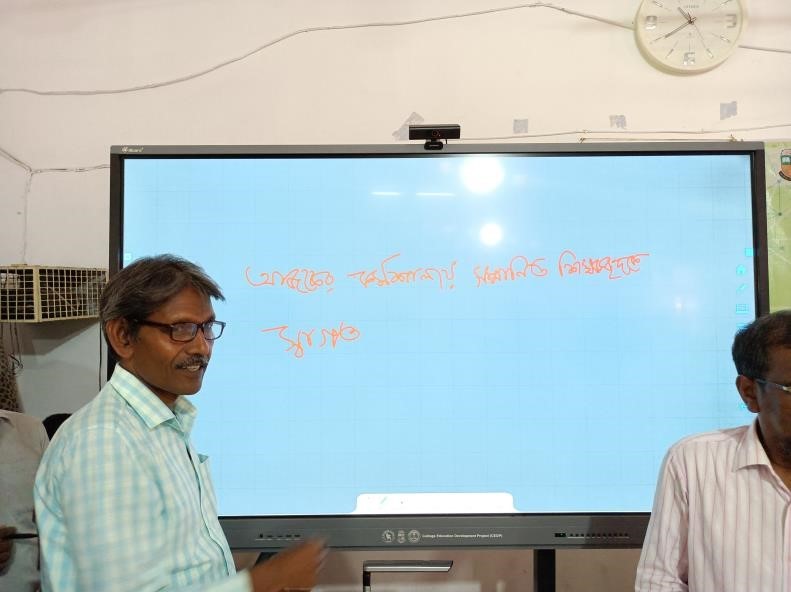
Sessions are conducted by using smartboard
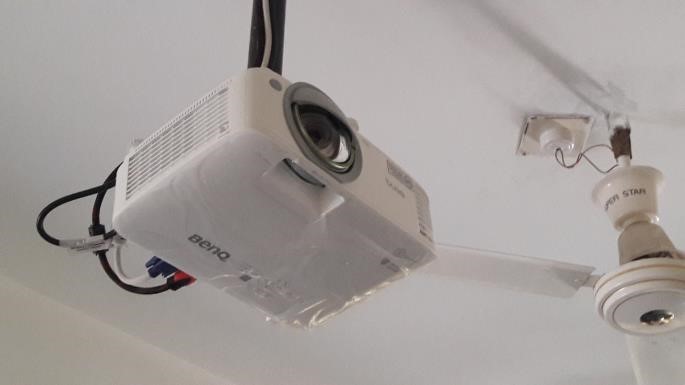
We have multimedia projectors in the classrooms
12) Availability of Wi-Fi/Hotspots
All the teachers, administrators, and students avail internet facility.
13) Motor Vehicle
Bus:The College has a bus, and that is the only vehicle of the college. Seven buses, however, run for the students’ transportation. These all are rental.
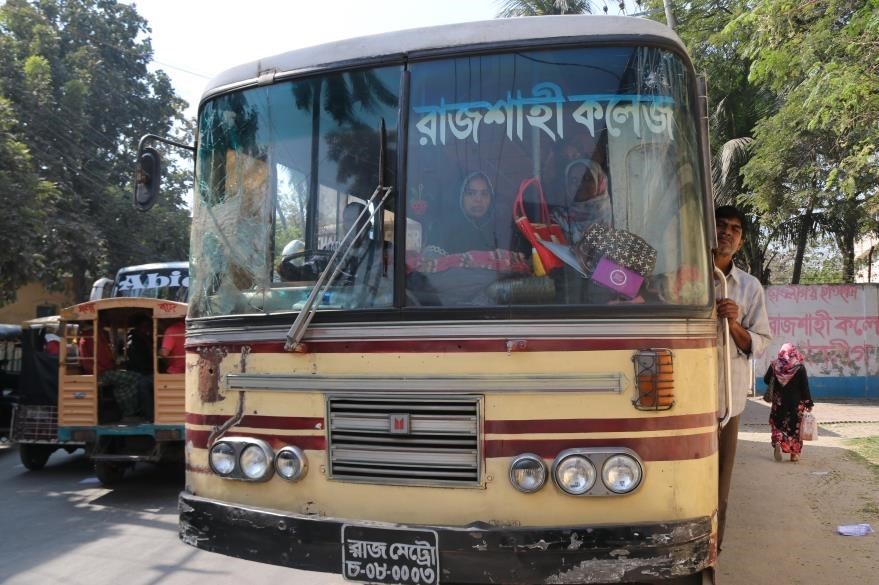
Rental buses are being used for student tranportation
Microbus: Rajshahi College has no micro-bus or other vehicle to serve the principal, or to meet the emergency.
14) Health care, mental health center, and Café
There is a health center in the campus. A physician (MBBS) gives primary treatment, and an assistant helps him. RC also provides mental health to the students by maintaining mental health center in the campus. A professional Psycho-social counselor gives service for the students. Beside these, there is a Café for students’ refreshment.
Chapter 3
Highlighting the Year, 2022-2023
3. Key Achievements of the College
3.1 Academic Achievements
- Term Papers: 98% participation in submitting the term papers
- Tutorial Exam: 98% participation in submitting the tutorial exam
- Attendance: 75% (in the Classes)
- Classroom Performance: Students Class performance is very satisfactory.
3.2 Technological Development & Security Concern
The surveillance system of all of the 23 departments and the library is improved by the use of CC Camera. All the class rooms are well furnished with multi-media projectors and Smart Boards. It is already stated that CEDP provides 87 multi-media projectors and 21 smartboards to the college. It gives 9 projectors and 5 smartboards in 2023, and rest of them, are given in the previous years.
The project helps to extend the ICT lab facility of the college by adding third lab in the campus with 65 computers. However, it was commenced in the previous years.The College provides in-house ICT training for the teachers in these lab. A continuous and free of cost ICT training for all students is being conducted by the ICT lab. Now the teachers and students are used to using technology. In addition, CEDP provided computer for the teachers (Laptop & Desktop; 38 of them in the 2023) that helps them to maintain technological activities.
3.3 Non-cognitive factors
Self-Efficacy: Students believe in his/her own ability to succeed in a particular situation which is called self-efficacy has been developed a lot through counseling to face the challenges in technology-oriented education system.
Motivation: Constant motivation is going on to actively take part in the process of learning as motivation involves biological, emotional, social and cognitive forces, teachers are constantly engaged in initiating and encouraging those faculties.
Self-Control: Students are constantly encouraged by the teachers to develop the ability of controlling themselves and regulate their emotions, thoughts and behavior in the face of temptations and impulses as it is an executive function, it is necessary for achieving specific goals. A psychological counseling team along with a professional psychologist gives counseling to improve the mental health and to reduce the trauma.
3.4 Key Achievements of the Departments
19 out of 23 departments of the college individually arranged national & international seminars and webinars focusing on academic issues and development under the present government.
3.5 Highlights of Student Activities of the Year
3.5.1 Academic
a) Classroom Performance
Classroom performance is the key of learning and the unique example of student response system. It allows the students to take part actively in the process of learning. Still our students are less inquisitive, but we have been trying to encourage them to ask questions which are the most important factor of inquisitiveness. And students are gradually responding to this system. We have succeeded a lot in doing so.
b) Sitting for examinations (formative and summative)
Sitting for examination is the conventional feedback of learning system. Though it is directly related to the academic recognition, students are very keen to attend all kinds of feedback on examination performance. Here the participation of the learners is almost 100%.
3.5.2 Co-curricular Activities
a) Sports: The College arranges annual sports in December 2022. Students from all the departments of the college participated in various events. Inter-department football and cricket were the special activities of the institution held in September 2023 and December 2023 respectively.
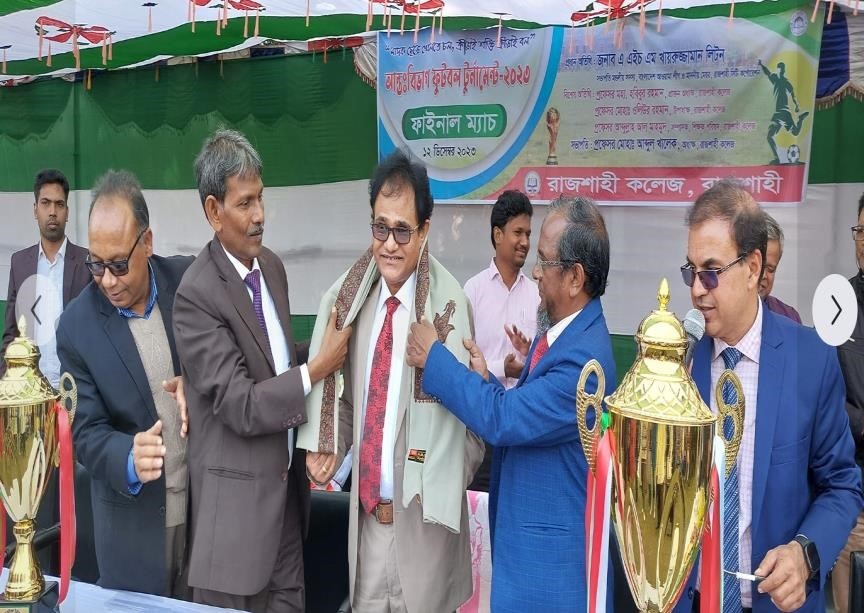
Inter-Department Football Competition, 12th 2023
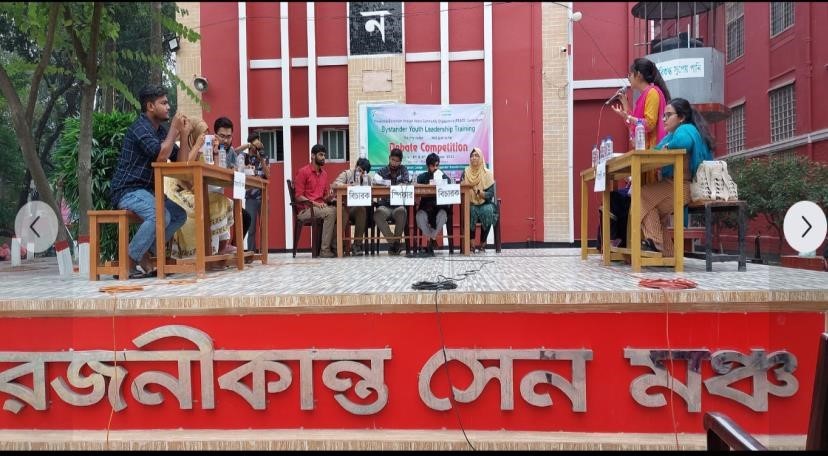
b) Cultural Activities: The College observes a cultural week. Students meet together in various cultural competitions.
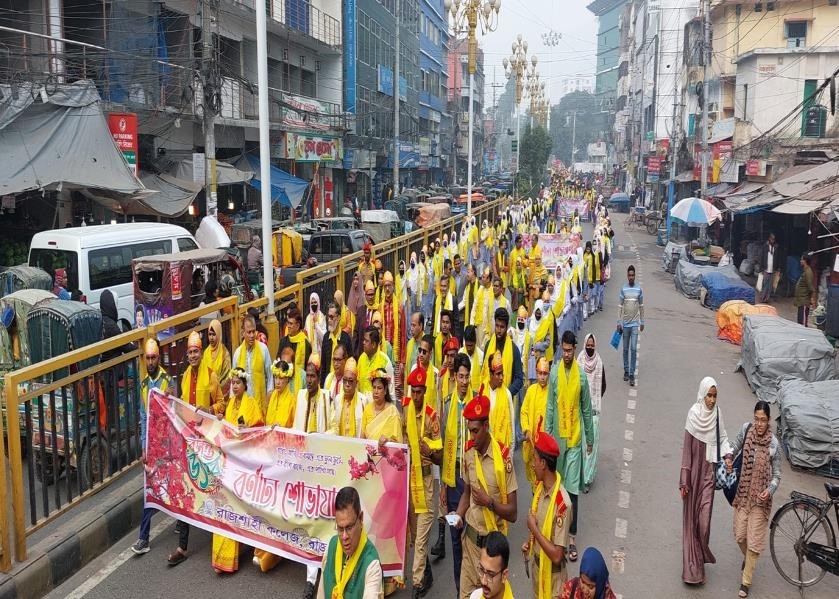
Basanta Baran, 2023
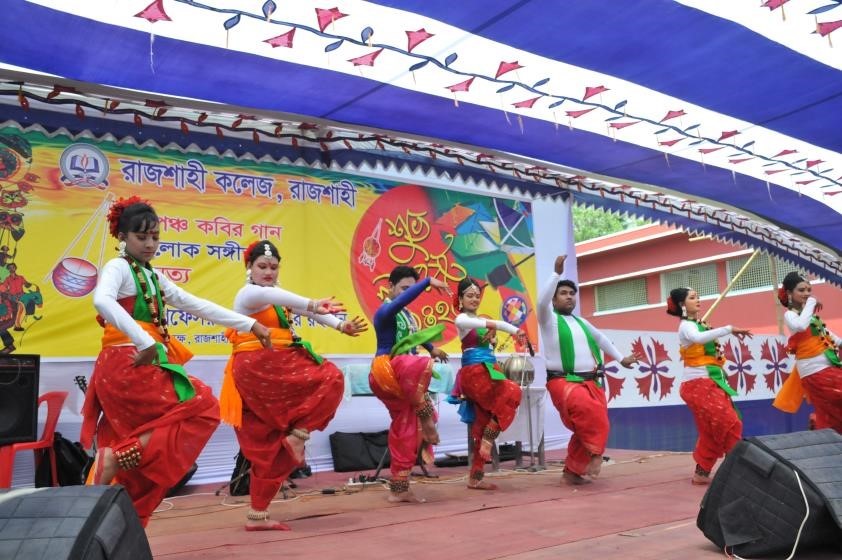
Barsha Baran, 2023
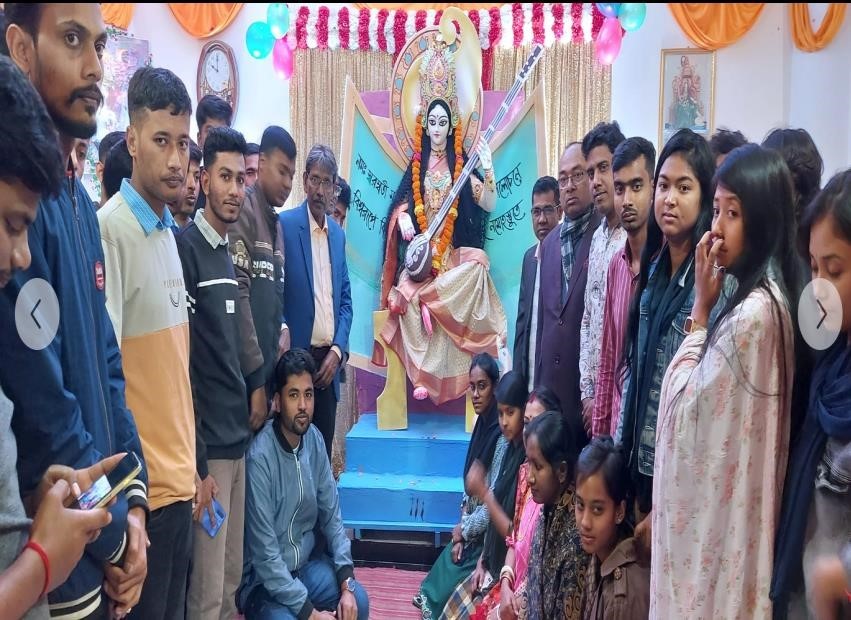
Rajshahi College observes Sharaswati Puja
c) Social Activities: The Red Crescent Society and the Bandhon (a blood donating organization) arranged blood donations camp in the previous years. They also distributed warm clothes and blankets among the poor people in the last winter. Rover Scouts, Rangers and BNCC unit also play roles to keep the campus clean once a month, take part disciplinary activities and march-past during the celebration of the national days. Our students are involved in some social awareness programs like health, human rights, enfranchisement and eve teasing issues arranged by the clubs active in the college campus.
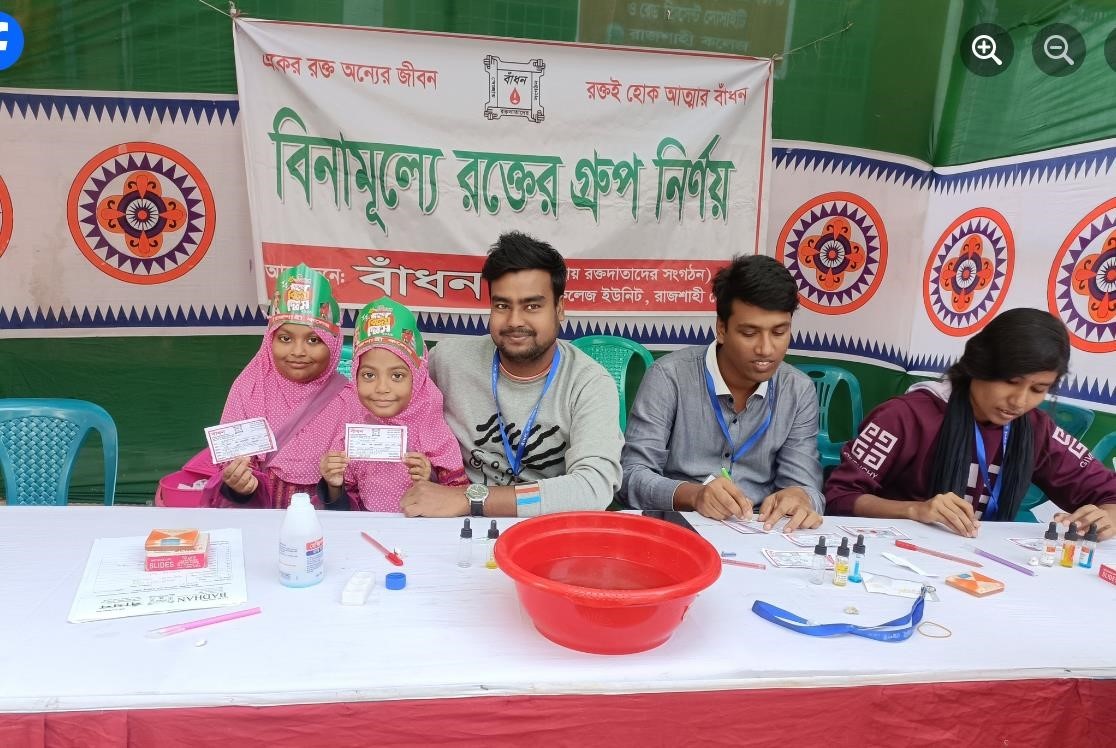
Blood donation and blood group determining Campaign, 2023
3.6 Key Achievements and Highlights of the Year of Institutional Development Grants (IDG)
To enhance the quality of learning in Rajshahi College, 22 packages had been adopted by the CEDP. These are as follows:
| Sl. No. | Package Name | Fiscal Year | Procurement Process | Remark |
|---|---|---|---|---|
| 1. | G–1 (Procurement of Furniture & Fixture for IDG Office & Internet Corner) | 2019-2020 | RFQ | |
| 2. | G–2 (Supply and Installation of Laptop & Desktop Computer, Photocopier, Printer and Scanner for IDG Sub-project Office and Internet Corner) | 2019-2020 | RFQ | |
| 3. | G–3 (Supply Installation and related services for Desktop and Laptop Computer for Rajshahi College) | 2020-2021 | OTM | Central |
| 4. | G–5 (Supply and Installation of Desktop Computer, IPS/Inverter and Webcam for Internet Corner at central library) | 2020-2021 | RFQ | |
| 5. | G–4 (Supply and Setting up of Furniture & Fixtures for the ICT Laboratory, Classroom and Laboratory, Classroom, and Library for Rajshahi College) | 2020-2021 | OTM | |
| 6. | G–6 (Supply, Installation and related services for Multimedia projector and Smart Board for Classroom for Rajshahi College) | 2020-2021 | OTM | |
| 7. | W–1 (Renovation & Refurbishment of Classroom, Lab, Library, Common Room & Wash Room for Rajshahi College) | 2020-2021 | OTM | |
| 8. | W–2 (Renovation & Refurbishment of Classroom, Lab, Library, Common room & Wash Room for Rajshahi College) | 2021-2022 | OTM | |
| 9. | G–11 (Supply Lab Equipments & Instruments for Science Departments of Rajshahi College) | 2022-2023 | OTM | |
| 10. | G–7 (Supply and Installation of Laptop & Desktop for CEDP Office & Departments for Rajshahi College, Rajshahi) | 2022-2023 | OTM | |
| 11. | G–8 (Supply of Books & Journals for the central library of Rajshahi College) | 2022-2023 | OTM | |
| 12. | G–9 (Supply and Settings of Air Conditioner for Rajshahi College, Rajshahi) | 2021-2022 | RFQ | |
| 13. | G–10 (Supply of Digital Smart Board for Classrooms & Related Services for Rajshahi College, Rajshahi) | 2021-2022 | OTM | Central |
| 14. | G–12 (MIS Software) | 2023-2024 | RFQ | |
| 15. | G–13 (Establishment of Internet Connectivity in College campus) | 2023-2024 | OTM | Central |
| 16. | G–14 (Establishment of Campus Networking for College) | 2022-2023 | OTM | |
| 17. | G–15 {Rajshahi College Journal (Central Journal)} | 2023-2024 | RFQ | |
| 18. | G–16 (Supply of Book Shelf for Central Library & Seminar Library of Departments of Rajshahi College.) | 2023-2024 | RFQ | |
| 19. | G–17 (Establishment of Extension Campus Networking for Rajshahi College) | 2023-2024 | RFQ | |
| 20. | G–18 (Supply the Scientific Equipment for Science Lab of Rajshahi College) | 2023-2024 | RFQ | |
| 21. | G–19 (Supply and installation of multimedia projector for classroom of Rajshahi College) | 2023-2024 | RFQ | |
| 22. | G–20 (Supply of the Books for Seminar Library of Rajshahi College) | 2023-2024 | RFQ |
CEDP approves 22 packages for the college; 2 of them are works, while the rest 20 are for goods; 11 of them are OTM initiated through e-GP system, and the rest 11 are RFQ. The IDG Management Team successfully signed all of the 22 contracts and out of them 20 packages is fully completed and 2 packages (G-19, G-20) are carried over to the FY 2023-24.
With the implementation of the packages, all of the 23 departments, labs of the Science departments, the central library and ICT labs of the college have been modernized. The project (CEDP) renovates classrooms of the departments of Chemistry, Zoology, Psychology, Geography, Sociology, Mathematics, Statistics, Botany, History and English with modern tiles and paints. The department seminar rooms of Chemistry and Botany are also included in the renovation. ICT labs and seminar rooms of three departments (Bangla, Sociology and Chemistry) have been renovated. The project supplies 32 multimedia projectors and 21 Smart Boards that enhance the teachinglearning environment. On the other hand, CEDP increase the capacity of the college ICT lab by adding 65 desktops. The environment of the lab has also been improved by the project for giving new air conditioners. It provides the scope of reading in an air conditioned environment for the students of Botany and Chemistry by adding Air Conditioners to their seminar libraries. Furthermore, the project improves the lab condition of the science departments and the office rooms for the teachers (of Botany).
Chapter 4
Teacher Development
4.1 Overview of Teaching Force of the College
Both Male and Female Teachers are teaching in the college. A total number of 39
teachers have Ph.D. Degrees. In the college, there are 244 posts in the college, and at present 229 teachers are posted therein. Besides, there are two posts of the Librarian and Assistant Librarian, and both of them are filled up. However, 16 teaching posts are still vacant. The following table gives an overview of the college’s teaching force:
Table 4.1: Working Teachers by subject, Gender and Educational Qualification
| Working Teachers | |||||
|---|---|---|---|---|---|
| Sl. No. | Department | Total | Male | Female | No. of PhD Holders |
| 1 | Bangla | 12 | 07 | 05 | 02 |
| 2 | English | 13 | 09 | 04 | 01 |
| 3 | Arabic & Islamic Studies | 09 | 09 | 00 | 02 |
| 4 | Urdu | 01 | 01 | 00 | 00 |
| 5 | Sanskrit | 04 | 03 | 01 | 00 |
| 6 | History | 11 | 10 | 01 | 02 |
| 7 | Islamic History and Culture | 10 | 8 | 02 | 03 |
| 8 | Philosophy | 11 | 09 | 02 | 01 |
| 9 | Political Science | 13 | 09 | 04 | 01 |
| 10 | Sociology | 08 | 04 | 04 | 01 |
| 11 | Social Work | 13 | 11 | 02 | 02 |
| 12 | Economics | 12 | 09 | 03 | 02 |
| 24 | Marketing | 00 | 00 | 00 | 00 |
| 25 | Finance & Banking | 00 | 00 | 00 | 00 |
| 22 | Accounting | 11 | 06 | 05 | 00 |
| 21 | Management | 11 | 08 | 03 | 03 |
| 13 | Physics | 11 | 09 | 02 | 01 |
| 14 | Chemistry | 12 | 10 | 02 | 01 |
| 16 | Botany | 12 | 03 | 09 | 04 |
| 17 | Zoology | 13 | 08 | 05 | 05 |
| 20 | Geography and Environment | 10 | 08 | 02 | 03 |
| 18 | Psychology | 10 | 07 | 03 | 01 |
| 19 | Statistics | 09 | 06 | 03 | 02 |
| 15 | Mathematics | 12 | 07 | 05 | 02 |
| 23 | ICT | 01 | 01 | 00 | 00 |
| Total = | 229 | 162 | 67 | 39 | |
Table 4.2: Number of Post at a Glance
| Name of the Post | Created Post | Working | Vacant Post |
|---|---|---|---|
| Principal | 01 | 01 | 00 |
| Vice Principal | 01 | 00 | 01 |
| Professor | 20 | 37 | 00 |
| Associate Professor | 57 | 56 | 05 |
| Assistant Professor | 80 | 95 | 03 |
| Lecturer | 83 | 41 | 13 |
| Librarian | 01 | 01 | 00 |
| Demonstrator | 08 | 00 | 08 |
| Physical Teacher | 01 | 00 | 01 |
| Assistant Librarian | 01 | 01 | 00 |
| Total = | 253 | 232 | 31 |
N.B. There are some attached and in-situ teachers. Therefore, number of vacant posts does not co-relate the number of post and the number posted therein.
4.2 Teacher Professional Development Programs
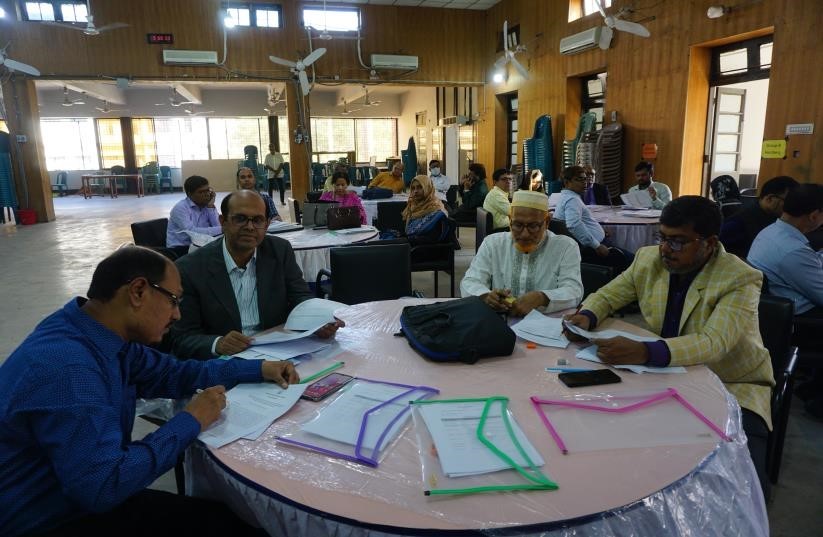
- Office Management Procurement Training for teachers:IGD sub-project of the College (CEDP) arranges office management and procurement training for the teachers. 59 teachers attended the training that improved their ability of using technology.
- ICT Training for Staff:To enhance the quality of the digital office IGD sub-project of the College (CEDP) provided ICT training for the staff, and 60 office staff attended therein. Obviously there is an immense impact on their service in the college.
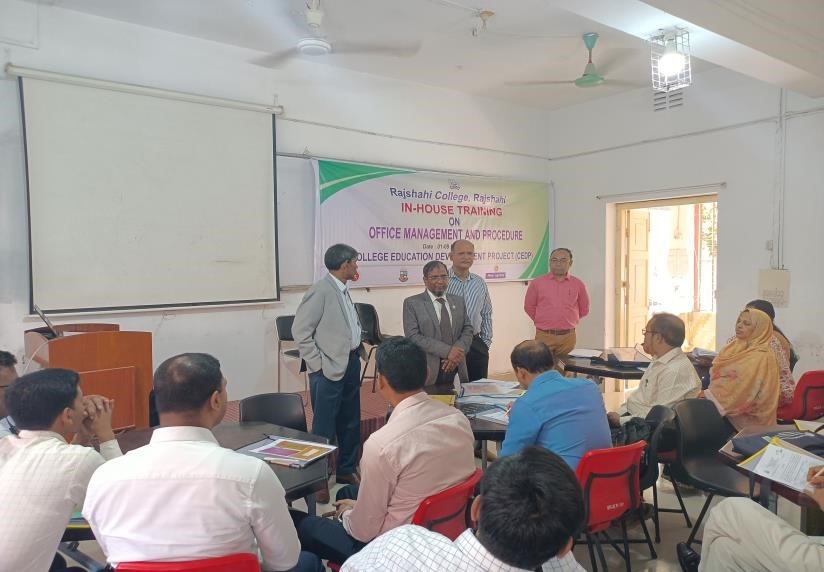
Teachers’ In-House Training on Office management and Procedure
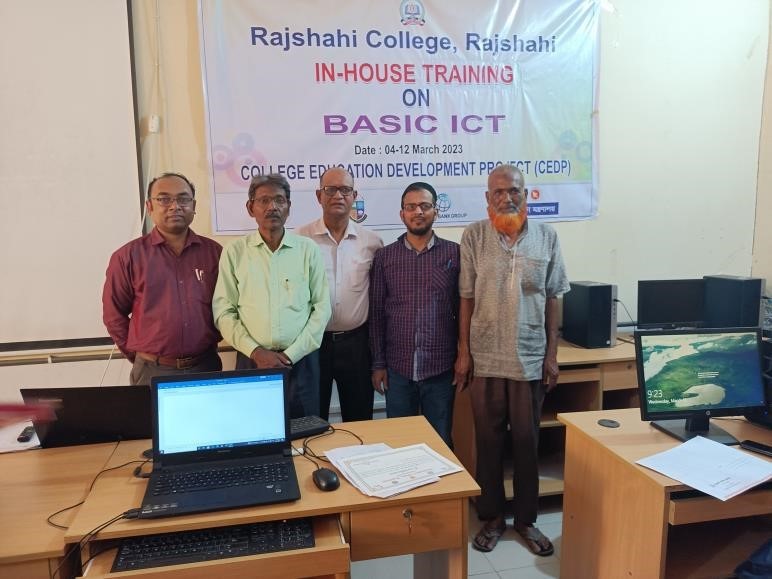
In-House Training on Basic ICT for the Staff
ICT Training for teachers (In-house): In the last fiscal year, a series of in-house trainings on ICT were conducted by the college ICT lab to enhance technological competence of the teachers and students. 90 teachers participated in the training course. On the other hand, about two thousand students took ICT training.
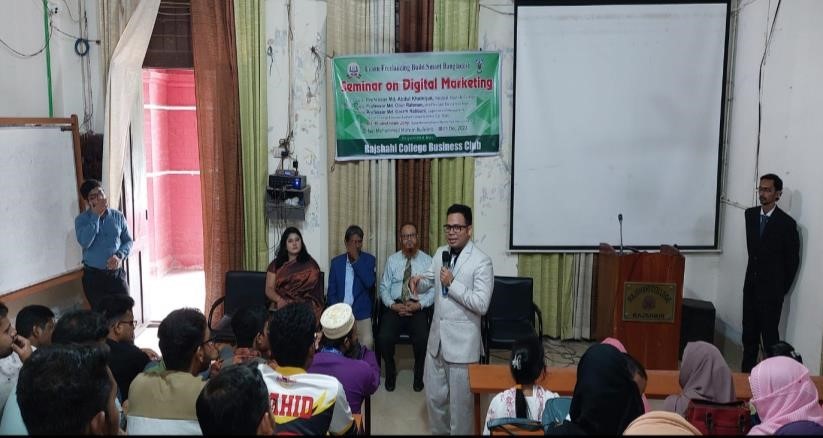
Departmental Seminars: 8 departments arranged seminars using virtual platform, while 11 conducted it physically. The scholars from abroad participated in these seminars and enriched our intelligentsia. Students participated and enjoyed the discourse.
4.1.1 Highlights of Teacher Development Activities of the Year
Writings in international research journal: 07 teachers contributed research articles to the international research journal published by the college authority and universities and teaching institution of other counties. Rajshahi College publishes three international journals. These are: 1) Journal of Rajshahi College (ISSN: 2959-8702) Journal of Social Science (ISSN: 2518-5896), 3), and Bangla Sahittiki (ISSN: 22271635). All the journals are published in the year 2023 (Journal of Rajshahi College, Vol. 1, Nos. 1&2; Journal of Social Science, Vol. 4, No. 1; Bangla Sahittiki Vol. 7).
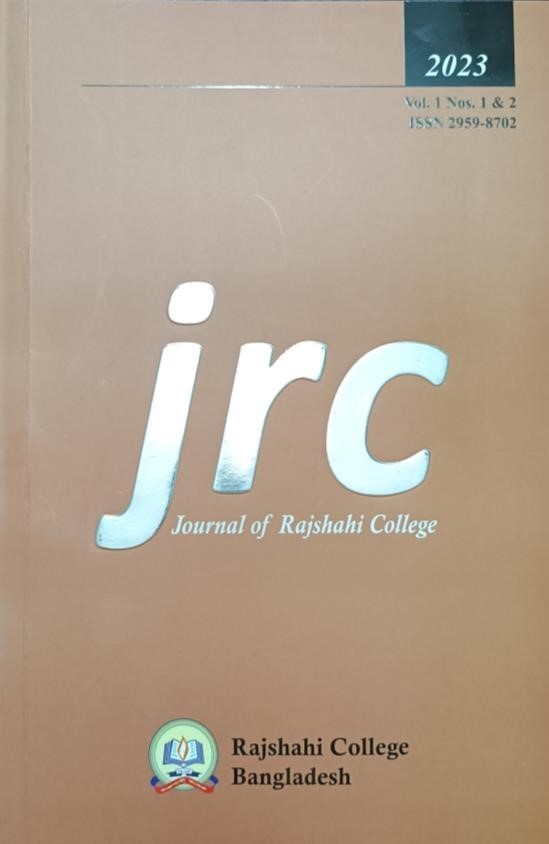
Journal of Rajshahi College (ISSN 2959-8702)
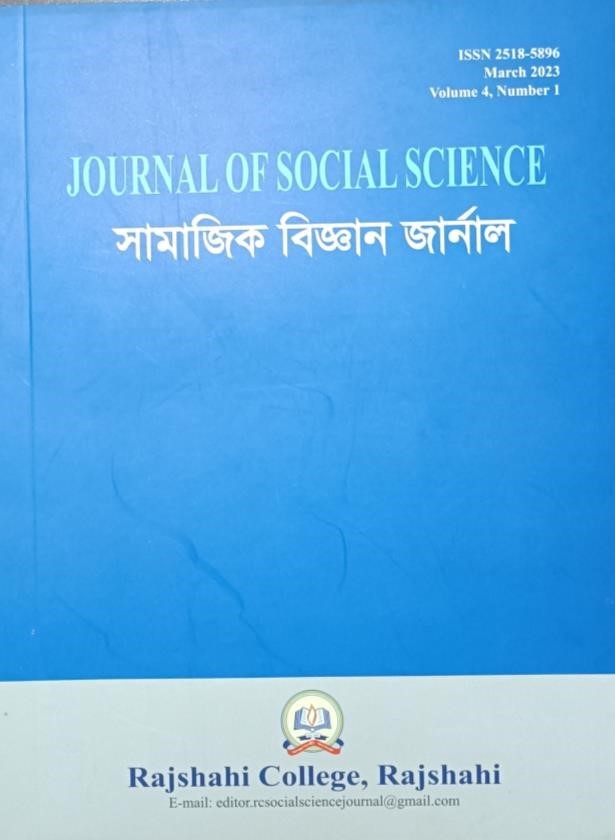
Journal of Social Science (ISSN 2518-5896)
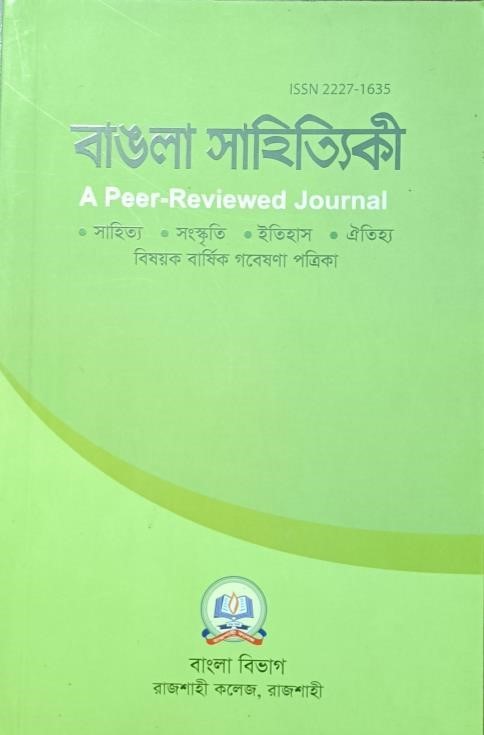
Bangla Sahittiki (ISSN 2227-1635)
Online Classes & International Webinars: During the COVID-19 period teachers showed their expertise in conducting online classes and participating in international webinars. They even arranged the webinar, and the international scholars participated therein.
Chapter 5
Budget and Finance
5.1 Summary of Annual Budget and Expenditures
Descriptions of total allocation & expenditure of the fiscal year 2021-22 are given below:
Table 5.1: Allocation & expenditure of the College, 2021-22
| Financial Code | Salary & Allowances | Allocation | Expenditure |
|---|
31 Rewards of Staffs
| 3111101 | Basic Salary of the officers | 1140800.00 | 111536807.00 |
| 3111201 | Basic Salary of the staffs | 3684000.00 | 3264564.00 |
| 3111302 | Travel Allowance | 62000.00 | 55781.00 |
| 3111306 | Education Allowance | 1477000.00 | 1072757.00 |
| 3111310 | Housing Rent Allowance | 54135000.00 | 46810847.00 |
| 3111311 | Medical Allowance | 3546000.00 | 3431518.00 |
| 3111312 | Telephone Allowance | 480000.00 | 439298.00 |
| 3111314 | Tiffin Allowance | 41000.00 | 37200.00 |
| 3111316 | Washing Allowance | 15000.00 | 11100.00 |
| 3111325 | Festival Allowance | 25610000.00 | 18716120.00 |
| 3111328 | Rest and Recreation Allowance | 3898000.00 | 3197560.00 |
| 3111335 | Bangla New Year Allowance | 2561000.00 | 1940722.00 |
| 3111338 | Other Allowance | 00 | 00 |
| Total = | 96649800.00 | 190514274.00 | |
32 Use of Goods & Services (Administrative Expenditures)
| 3211113 | Electricity | 3500000.00 | 1544825.00 |
| 3211117 | Internet/Telex/Fax | 400000.00 | 398400.00 |
| 3211119 | Postal | 10000.00 | 10000.00 |
| 3211120 | Telephone | 25000.00 | 8278.00 |
| 3211127 | Books and Magazines | 300000.00 | 299807.00 |
| 3243101 | Internal Travel Allowance (Travel & Transfer) | 00 | 00 |
| 3255101 | Computer Accessories (Printing & Stationaries) | 140000.00 | 139750.00 |
| 3255105 | Other Stationaries (Printing & Stationaries) | 120000.00 | 119987.00 |
| 3256102 | Chemicals | 430000.00 | 429608.00 |
| 3256103 | Usable Articles | 180000.00 | 179975.00 |
| 3256106 | Dress (Materials) | 120000.00 | 56900.00 |
| 3256107 | Sports Items | 170000.00 | 169994.00 |
| 3257301 | Festivals | 90000.00 | 89875.00 |
| 3258103 | Computer (Repairing and Maintenance) | 120000.00 | 119900.00 |
| Total = | 5605000.00 | 3567299.00 | |
38 Other Expenditures
| 3821101 | Land Development Tax | 200000.00 | 125650.00 |
| 3221103 | Urban Tax | 4000000.00 | 4000000.00 |
| Total = | 4200000.00 | 4125650.00 | |
41 Financial Assets (Capital Expenditures)
| 4112306 | Laboratory Equipment’s | 630000.00 | 629576.00 |
| 4112312 | Education and Educational Materials | 230000.00 | 229996.00 |
| Total = | 860000.00 | 859572.00 | |
5.2 Summary of Annual Revenues
The students give tuition and admission fees in the fiscal year 2022-23. The following table exhibits statistics’:
Table 5.2: Fees Collected from Degree pass and Honors students, 2015-2016 to 20192020
| Year | Session | No. of Students (Tuition & Admission Fees) | Total | Full/Half free and stipend rewarded | Grand Total |
|---|---|---|---|---|---|
| Honours 1st year | 2022-23 | 4123×329/- | 1356467.00 | 1356467.00 | |
| Honours 2nd year | 2021-22 | 1713×329/- | 892577.00 | 892577.00 | |
| Honours 3rd year | 2020-21 | 2735×329/- | 899815.00 | 899815.00 | |
| Honours 4th year | 2019-20 | 2191×329/- | 720839.00 | 720839.00 | |
| Degree1st year | 2022-23 | 466×329/- | 153314.00 | 153314.00 | |
| Degree 2nd year | 2021-22 | 301×329/- | 99029.00 | 99029.00 | |
| Degree 3rd year | 2020-21 | 154×329/- | 50666.00 | 50666.00 | |
| Honors 1st year Re-admission | 2017-18 | 00 | 00 | 00 | |
| Total = | 11683 | 4172707.00 | 4172707.00 | ||
Table 5.3: Fees Collected from Preliminary pass and Masters Students, 2017-2018 & 2018-2019
| Year | Session | No. of Students (Tuition & Admission Fees) | Total | Full/Half free and stipend rewarded | Grand Total = |
|---|---|---|---|---|---|
| Masters Part-I | 2021-22 | 1063×329/- | 349727.00 | ||
| Masters Final Year | 2020-21 | 6422×394/- | 2530268.00 | ||
| Masters Final Year Readmission | 2020-21 | 00 | 00 | ||
| Total = | 7485 | 2879995.00 | |||
Table 5.4: Fees Collected from HSC Students, 2017-2018 & 2018-2019
| Class | Session | No. of Students (Tuition & Admission Fees) | Total (taka) | Full/Half free and stipend rewarded | Grand Total = |
|---|---|---|---|---|---|
| Class-XI Admission | 2022-23 | 473×264/- | 124872.00 | 124872.00 | |
| Class-XII Admission | 2021-22 | 330×24/- | 7920.00 | 7920.00 | |
| ’’ | ’’ | 121×264/- | 31944.00 | 31944.00 | |
| Total = | 924 | 164736.00 | 164736.00 | ||
Chapter 6
Summary and Conclusion
The annual report, 2023, a comprehensive exploration of Rajshahi College, affords a rich tapestry of insights into the institution’s governance, academic landscape, achievements, faculty development, and financial contours. This culmination serves as an academic reflection, amalgamating the diverse threads woven throughout the narrative to present a holistic perspective on Rajshahi College.
After a brief statement of the college’s establishment in chapter 1 of the report, Chapter 2 meticulously outlines the governance and teaching structure of the college, delineating the hierarchical positions and staffing distribution. A quantitative breakdown of teaching and office staff provides a snapshot of the Institution’s scale and underscores the intricate balance maintained for effective academic administration. This chapter serves as the foundational framework upon which the subsequent academic and financial aspects of the college.
The academic overview presented in Chapter 3 accentuates the achievements of the academic year 2022-2023. Beyond the statistical enumeration of enrollments and pass rates, the chapter delves into the qualitative dimensions of student performance and departmental accomplishments. The analysis of non-cognitive factors, technological integration, and infrastructure development portrays RC as an evolving educational entity attuned to contemporary needs. The emphasis on student activities, co-curricular engagement, and societal contributions underscores the institution’s commitment to holistic education.
Chapter 4 provides a nuanced exploration of teacher development programs, offering insights into the composition and professional growth of the faculty. It underscores college’s commitment to academic excellence through initiatives to skill enhancement of service providers. RC trains up the teachers on office management and the staffs on ICT. In addition, RC provides computers (laptops & desktops), and tries continuous professional development that recognizes the pivotal role of its educators in shaping the learning environment.
The financial narrative in Chapter 5 unveils the fiscal architecture governing Rajshahi College. The transparent exposition of budgetary allocations, expenditures, and revenue streams reflects a sound fiscal management ethos. The meticulous categorization of financial assets and expenditures provides stakeholders with a lucid understanding of the economic underpinnings supporting the college’s academic endeavors.
In synthesis, Rajshahi College emerges as an educational crucible where governance, academia, and finance converge to foster an environment of scholastic eminence. The institution’s commitment to academic diversity, technological integration, faculty development, and fiscal prudence positions it as a formidable bastion of learning. As the college traverses its odyssey, these foundational pillars not only uphold its current stature but also fortify its resilience and adaptability in the ever-evolving landscape of higher education.
The exploration of Rajshahi College across the report unravels a narrative that extends beyond statistics and financial figures. It reveals an institution pulsating with intellectual vibrancy, pedagogical fortitude, and a commitment to societal engagement. As Rajshahi College charts its course into the future, the chapters presented here lay the groundwork for an ongoing saga of academics.
Looking ahead, Rajshahi College stands at the precipice of continued growth and evolution. In 2023, it achieved clear progress in every sphere- in governance, academic and intellectual improvements, enhancement of the quality of education, improvement of teachers and staff skills, and preserving the campus environment. The delineated achievements and initiatives serve as stepping stones for future aspirations. Academic excellence, technological innovation, and financial sustainability remain paramount. As a dynamic entity, RC should leverage its accomplishments as catalysts for future advancements, ensuring its enduring legacy as a beacon of intellectual prowess and educational leadership.